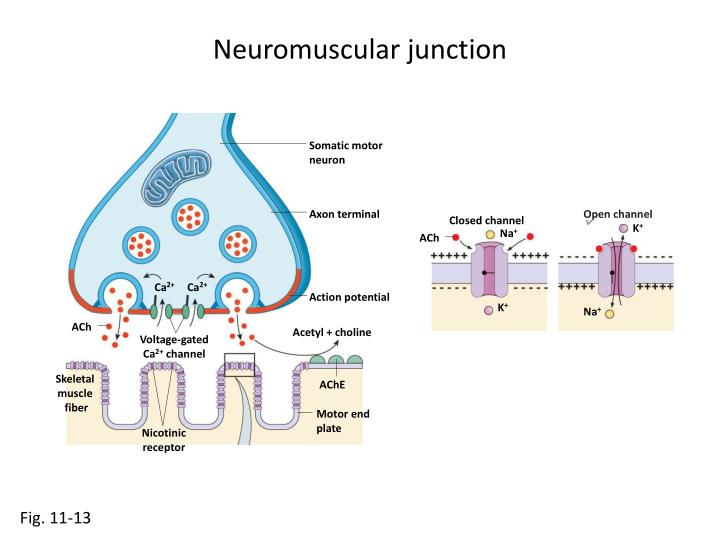
 To understand myasthenia gravis, it helps to first understand how a healthy nerve communicates with a muscle. The connection between a nerve and a muscle is called the neuromuscular junction (as pictured).
The neuromuscular junction allows messages from the central nervous system to be transmitted to muscles, leading to contraction of the target muscles. One of the neurotransmitters used in this communication process is called acetylcholine (ACh). The ACh, once released into the neuromuscular junction, will bind to acetylcholine receptors on the muscle cell surface leading to depolarization and activation of that muscle cell.
What Causes Myasthenia Gravis in Dogs?
Myasthenia gravis occurs when communication between nerves and muscles becomes impaired. There are two ways this can happen: the disease can be congenital, present at birth, or acquired later in life.
Congenital Myasthenia Gravis
In rare cases, dogs are born with abnormal neuromuscular junctions or too few functional acetylcholine receptors. Symptoms usually become noticeable around 6–9 weeks of age. Certain breeds appear to have a higher risk, including Dachshunds, Jack Russell Terriers, Springer Spaniels, and retrievers.
The prognosis for congenital myasthenia gravis is generally guarded. However, spontaneous remission has been reported in Miniature Dachshunds around six months of age.
Acquired Myasthenia Gravis
In acquired myasthenia gravis, antibodies form against those acetylcholine receptors, which leads to internalization of the receptor by the muscle cell. When this happens, there are fewer receptors for the ACh to bind to, and the patient becomes weak and will fatigue more easily. This disease mainly affects skeletal muscle.
CLINICAL SIGNS
The most common clinical sign is weakness. The weakness usually starts in the rear legs, but can progress to involve all four limbs. A common presentation is an animal that improves with rest, but the weakness will become more evident as they move around.
Common signs include:
- Exercise-induced weakness
- Difficulty rising or walking
- Stumbling or collapsing after activity
- Progressive fatigue with movement
In some cases, the disease affects muscles involved in eye movement, facial expression, or swallowing, which may cause:
- Drooping eyelids
- Changes in facial expression
- Difficulty chewing
- Trouble swallowing food or water
A severe form of myasthenia gravis is called fulminant myasthenia gravis, and these patients can’t move their limbs at all; they may have trouble expanding the chest wall and therefore can have troubles breathing.
Megaesophagus in Dogs With Myasthenia Gravis
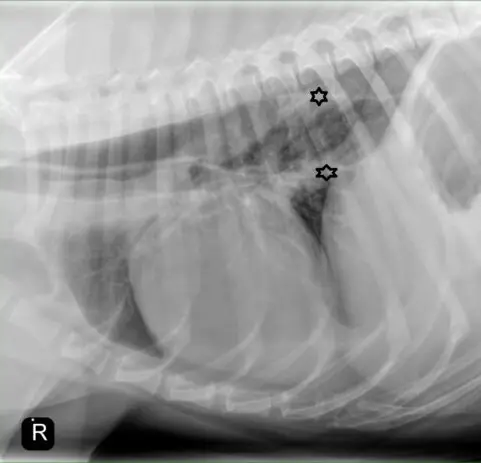
A significant number of dogs with acquired myasthenia gravis develop megaesophagus, a condition in which the esophagus becomes enlarged and loses its ability to move food normally toward the stomach.
Dogs with megaesophagus may:
- Regurgitate food or water shortly after eating
- Drool excessively
- Have difficulty maintaining weight
One of the most serious complications is aspiration pneumonia, which occurs when food or liquid enters the lungs. Megaesophagus is less common in cats, likely due to differences in the muscle composition of the feline esophagus.
How Myasthenia Gravis in Dogs Is Diagnosed
Veterinarians can diagnose myasthenia gravis using several tests, including:
- Acetylcholine receptor antibody testing (AChR antibody titer) – considered the gold standard
- Response to acetylcholinesterase inhibitors such as neostigmine
- Electrodiagnostic testing, including repetitive nerve stimulation
These tests help confirm impaired communication at the neuromuscular junction.
Treatment for Myasthenia Gravis in Dogs
Treatment focuses on improving nerve-to-muscle communication and managing complications.
The most commonly used medications are acetylcholinesterase inhibitors, such as pyridostigmine bromide (Mestinon). These drugs slow the breakdown of acetylcholine, allowing it to remain in the neuromuscular junction longer and increasing the likelihood that it will activate available receptors.
In some cases, immunosuppressive medications such as prednisone or mycophenolate may be used to reduce the immune system’s attack on the receptors. These medications must be used cautiously, especially if aspiration pneumonia is present.
Managing Megaesophagus in Dogs
Dogs with megaesophagus require special feeding management. Recommendations typically include:
- Feeding in an upright position
- Offering smaller, more frequent meals
- Keeping the dog’s head elevated for 10–15 minutes after eating
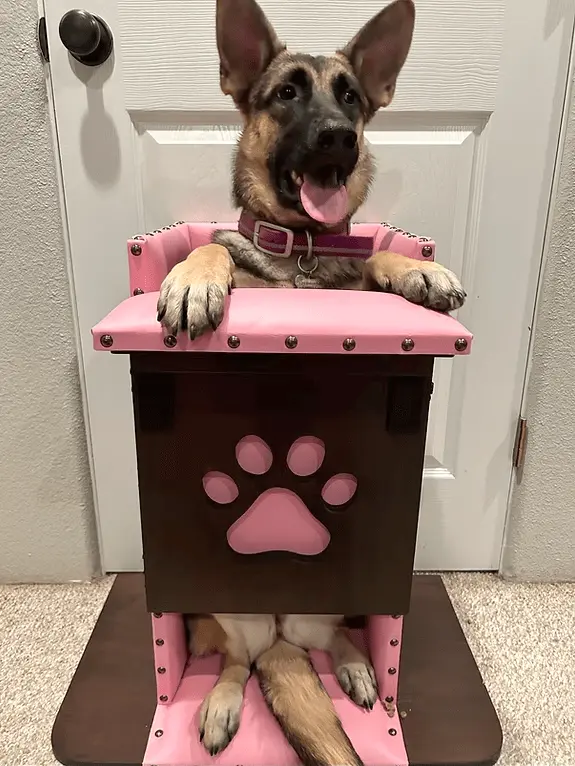
Some owners use a Bailey Chair (as in photo below), which helps keep the dog upright during feeding so food can move into the stomach more easily.
Prognosis for Dogs With Myasthenia Gravis
The prognosis is guarded. We are able to resolve the weakness in most cases, but the big problem is the difficulty managing the megaesophagus and related aspiration pneumonia. Even after the auto-immune process has resolved, 50% of dogs will continue to have megaesophagus lifelong; if this happens, continued precautions (i.e. elevated feedings, etc.) will need to be continued for the remainder of the patient’s life.Some patients have a tumor somewhere in the body that is the cause of the abnormal immune response. For example, cats will sometimes have a thymoma in the mediastinum that is causing the disease. The myasthenia gravis likely won’t be cured unless that tumor can be removed in its entirety.
When to Seek Veterinary Care
If your dog shows signs of muscle weakness, rapid fatigue during activity, regurgitation, or difficulty swallowing, consult your veterinarian for evaluation. Early diagnosis and treatment can significantly improve quality of life for dogs with myasthenia gravis. For more information or to schedule a consultation, contact Wisconsin Veterinary Neurology & Surgical Center.