
In December 2024, Hoss presented with signs consistent with a severe T3–L3 myelopathy. MRI identified an acute T12–T13 intervertebral disc herniation causing predominantly left-sided extradural spinal cord compression, with milder compression on the right. A left-sided T12–T13 hemilaminectomy was performed to decompress the spinal cord. Fenestration of the adjacent T11–T12, T12–T13, and T13–L1 disc spaces was also completed to reduce the risk of future disc herniation.
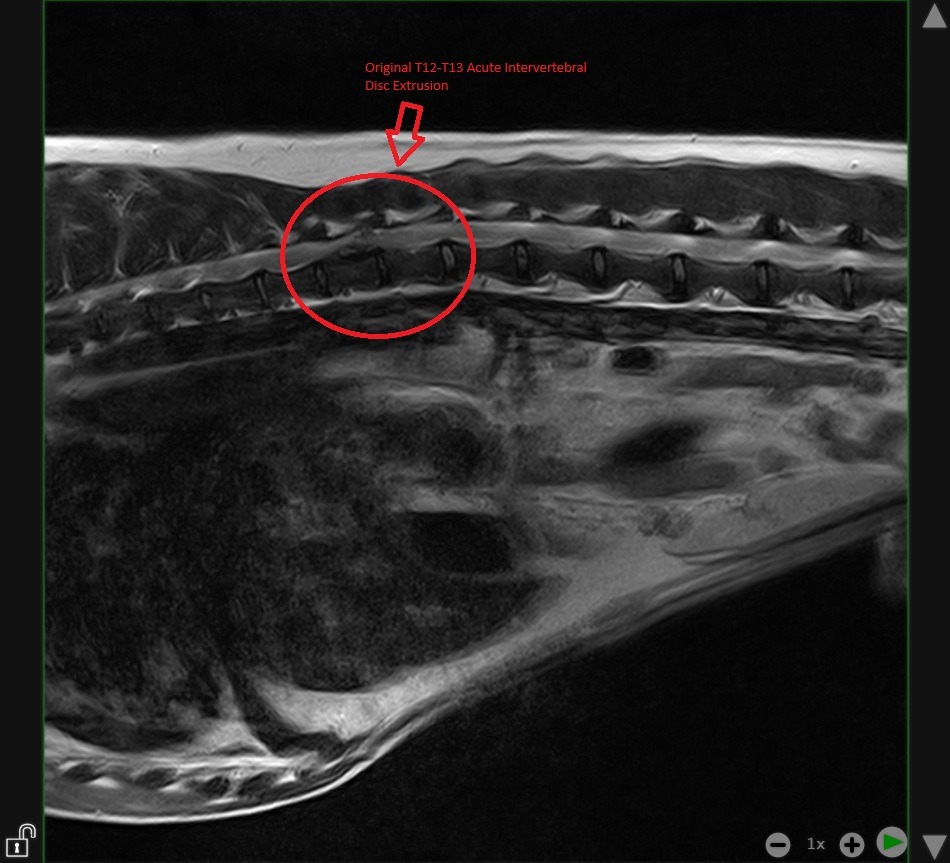
Original T12-T13 Acute Intervertebral Disc Extrusion Location
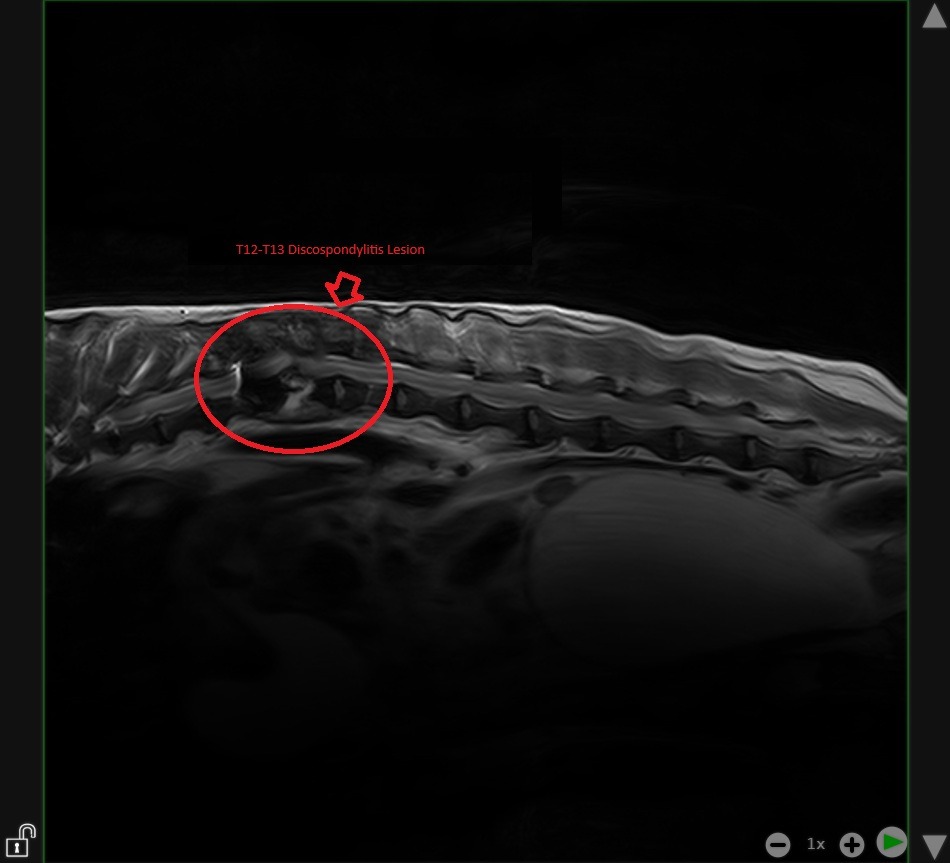
T12-T13 Discospondylitis Lesion Location
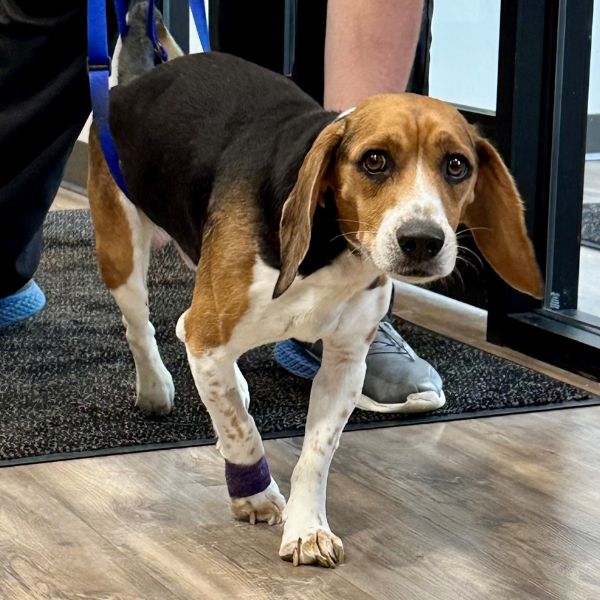
Following surgery, Hoss experienced a luxation (dislocation) of his right hip and later underwent a femoral head ostectomy (FHO) at another facility. He subsequently developed discospondylitis, an infection involving the intervertebral disc space at the original surgical site, caused by a methicillin-resistant Staphylococcus infection.
Dr. Moeser later performed a revision surgery to address the infection. Following the procedure, Hoss began long-term antibiotic therapy and was placed on 4–6 weeks of strict crate rest. At that time, his prognosis remained guarded, though there was hope he could regain meaningful neurologic function.
Over the following months, Hoss underwent extensive recovery and rehabilitation with remarkable dedication from both him and his owners. Gradually, he regained movement in his hind limbs and eventually progressed to walking again. Although he will never fully return to normal neurologic function, Hoss now enjoys a happy life with his family and canine siblings.
If your pet is experiencing mobility issues, weakness, back pain, or other signs of a neurologic condition, our team is here to help. We offer advanced diagnostics, treatment, and surgical care for pets with complex neurologic conditions.
Contact our team to schedule an appointment or learn more about how we can help.