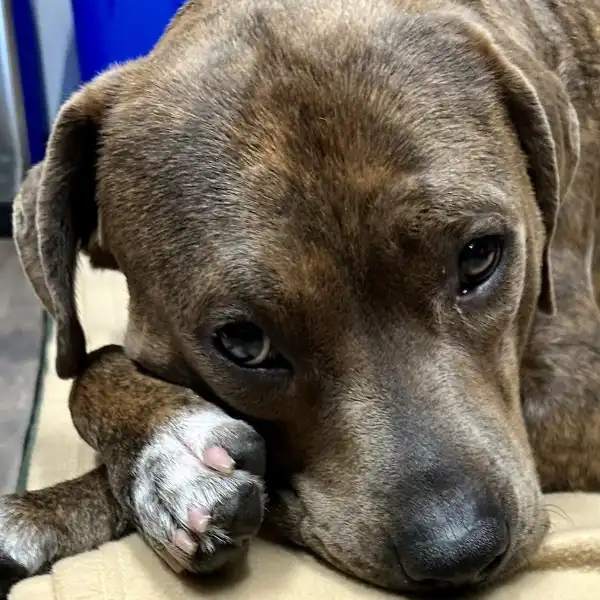
Roman first presented to WVNSC in December 2025 as a 2-year-old intact male Pit Bull who had recently been rescued from a park in Oshkosh, Wisconsin. Despite his difficult start in life, Roman quickly won over everyone he met with his gentle nature and resilient spirit.
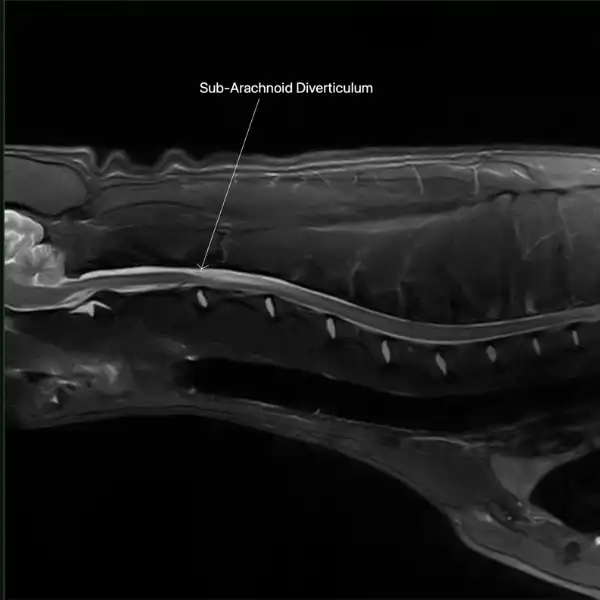
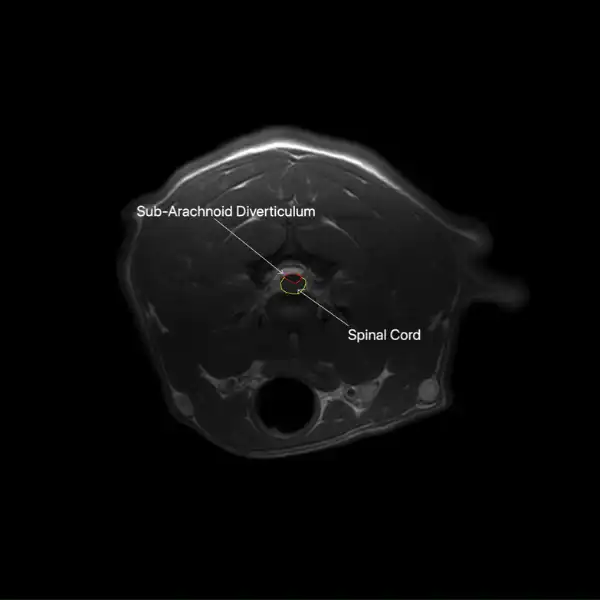
At the time of his evaluation, Roman was experiencing intermittent knuckling in all four limbs, a sign of neurologic dysfunction. Interestingly, he did not appear painful, but his abnormal gait raised concerns about a cervical spinal cord disorder. An MRI of Roman’s cervical spine revealed a C2-C3 subarachnoid diverticulum, a condition in which cerebrospinal fluid (CSF) accumulates within the subarachnoid space around the spinal cord, causing compression of the spine.
Treatment options for subarachnoid diverticula include medical management, typically with anti-inflammatory medications such as corticosteroids, or surgical intervention. Studies have shown that approximately 85% of dogs treated surgically either improve or remain stable, compared with about 60% of medically managed dogs.
The shelter initially elected medical management over the holiday season while fundraising efforts were underway to help cover the cost of surgery. Fortunately, Roman remained neurologically stable during this time.
In March 2026, Roman returned to WVNSC and underwent a C2-C3 dorsal laminectomy and durectomy surgery performed by Dr. Adam Moeser. The goal of the surgery was to relieve pressure on the spinal cord and restore normal CSF flow. While the long-term prognosis for dogs with this condition is generally considered guarded to good, recurrence of clinical signs can occur over time. Throughout his treatment, Roman’s affectionate personality made him a favorite among the staff, particularly Dr. Moeser, who cared for Roman throughout his recovery following surgery.
Roman’s recovery was not without challenges. As is sometimes seen following spinal surgery, he was initially weaker during the first 24 hours after his procedure. However, he soon began making steady progress and regained the ability to walk independently.
Today, Roman continues to do well. His journey from stray to successful surgical patient is remarkable on its own, but the next chapter of his story would prove even more meaningful. During his treatment and recovery, Roman formed a special bond with Dr. Moeser. Over the months spent caring for him, it became clear that Roman was a special dog whose resilience and affectionate nature left a lasting impression on everyone who met him.
After helping Roman through surgery and rehabilitation, Dr. Moeser and his family decided to make him a permanent member of their family. Knowing that Roman’s neurologic condition could make him more difficult to place in a forever home, they wanted to ensure he would always have the love, stability, and care he deserved. What began as a doctor-patient relationship grew into a lifelong connection, giving Roman the loving home he had been missing since being rescued from the streets.
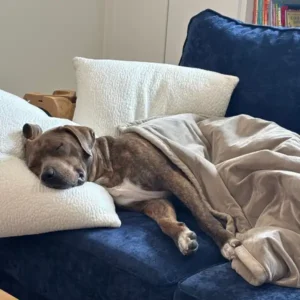
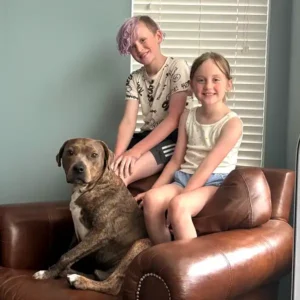
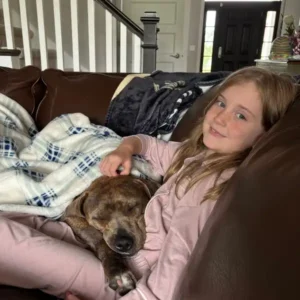
These days, Roman remains a beloved part of the WVNSC family. He is a frequent visitor to the office and can usually be found relaxing beside Dr. Moeser’s desk. Staff members often stop by the office to give him attention, receive a few tail wags, and enjoy a quick visit with one of the clinic’s favorite four-legged team members.
From rescued stray to successful surgical patient, beloved family member, and cherished office companion, Roman’s story is a testament to the power of second chances, compassionate veterinary care, and the remarkable bonds that can form between people and the animals whose lives they help change.